In brief
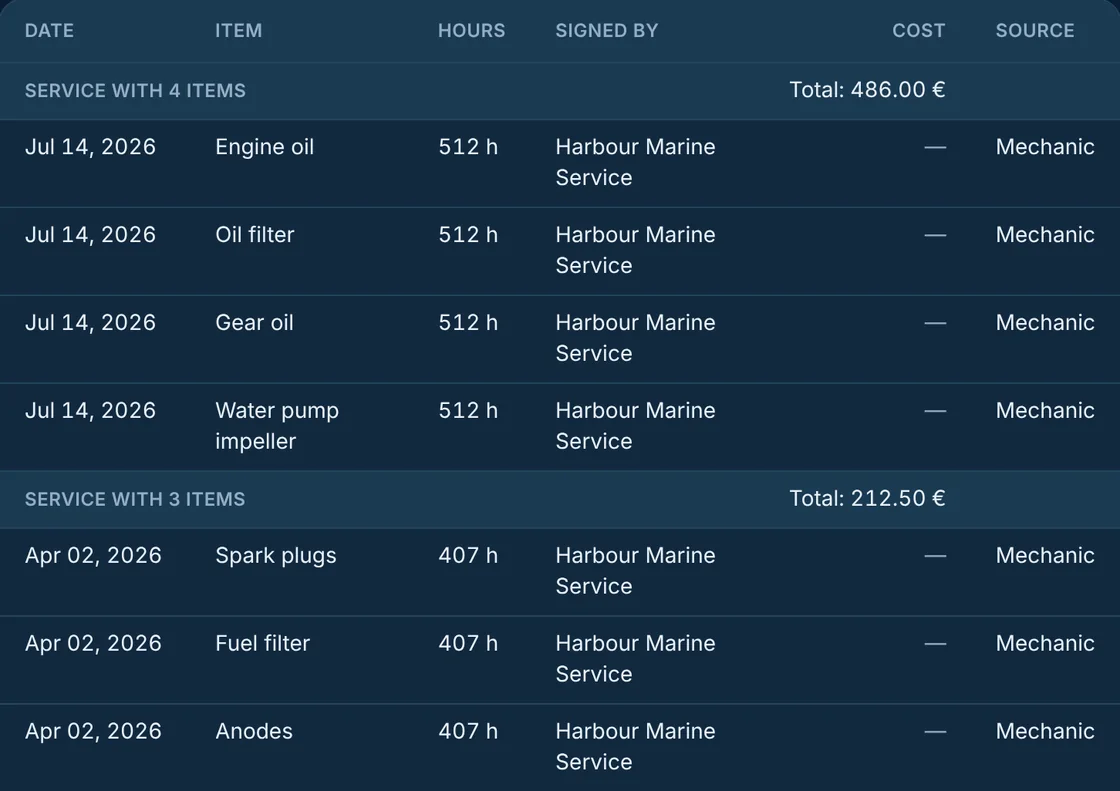
- Every job stays tied to the boat, with date, engine hours and who did it.
- The mechanic's work carries their signature.
- Every correction is added to the original: you can see who changed what, and when.
- When you sell, you hand over the history in a PDF the buyer can verify.
- Due dates reach you early, so the history stays complete year after year.
Your maintenance history, all in one place
Invoices, receipts, messages from the mechanic, the logbook: with ALFA the boat's story sits in one place, and you always know when the impeller was changed or the last service was done.
It helps every season, and it is worth even more the day you sell.
A complete history brings out your boat's value
Whoever buys a used boat also buys its history. When they can see it, they know what work was done, the survey is simpler and the negotiation starts from facts: a well-kept boat is valued for what it is.
And a history signed by whoever did the work, which the buyer can verify, is worth more than any list.
What ALFA does for an owner who wants to sell well
It keeps every job tied to the boat
With the ALFA app every job goes into the boat's history with date, engine hours and who did it. The history lives on the server: it stays safe even if you change phone, and it stays with the boat year after year.
It has the work signed by whoever did it
The mechanic scans your boat's QR code and proposes the jobs done from the app. You approve them, and they go into the history with their signature. The buyer reads the signature of the person who worked on the engine.
It keeps track of every correction
Every job stays recorded. If something needs correcting, whoever signed it corrects it, and the correction is added to the original without erasing it: you see who changed what, and when. If you want to flag something about a mechanic's job, you can dispute it, and the dispute is recorded too.
It gives you a document to hand to the buyer
From the app you generate the maintenance history PDF, in your language. At the bottom there is a QR code: the buyer scans it and sees on the ALFA website that the data matches what was recorded. Checking takes a moment.
It keeps the history complete, year after year
A history is worth something when it is complete. ALFA works out engine due dates by hours and by date and warns you before they arrive: the service gets done in time, and goes into the history.
How to get started
Download the app, add the boat with its engine and current hours, and log the jobs you remember or have an invoice for. From then on, every job by the mechanic comes from them, signed.
An example of a maintenance history at sale time
Example with demo data. An owner sells their motorboat after four seasons. The ALFA history holds the yearly services, the impeller change and the winter storage, each with date, engine hours and the signature of the workshop that did it. They generate the PDF and send it to an interested buyer. The buyer scans the QR code, sees that the document matches the recorded data and knows what was done on the engine. The negotiation starts from the boat and its history.
The certified service history collects the work recorded over time on this vessel. Each job is signed by the person who declares having carried it out, who is solely responsible for it. ADC Tech Marine attests only that it has collected and stored this data over time; it does not verify its accuracy and is not liable for false statements or fraudulent use by those who entered them, nor for any resulting damage.